A visual narrative of my familial migratory experiences
Seeking; safety, security, stability, longevity
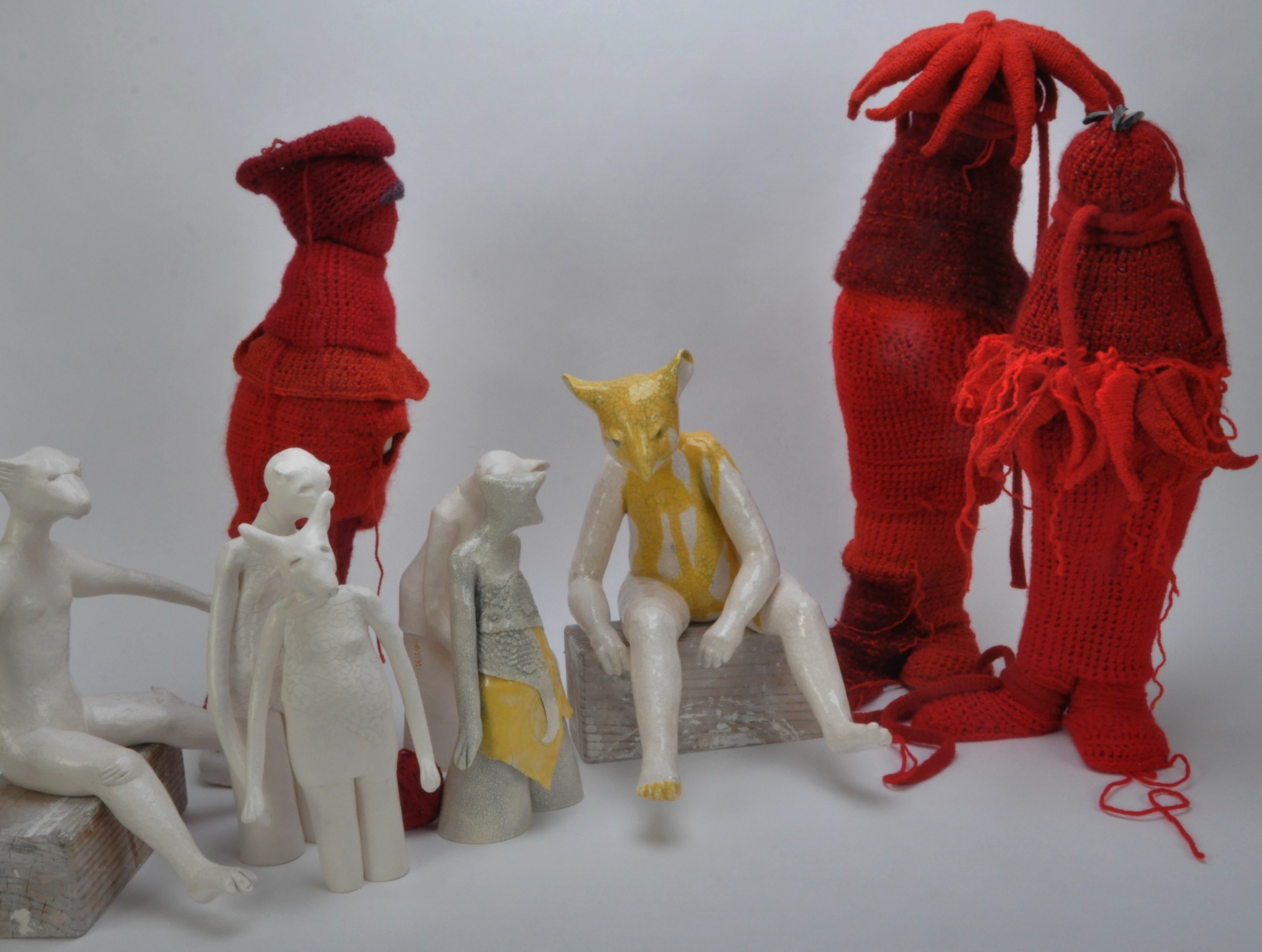
Wrapped; in comfort, warmth, physical, physiological
Red yarn; red tape, waiting, patience, resilience
Red fibre; blood lines, blending, next generations
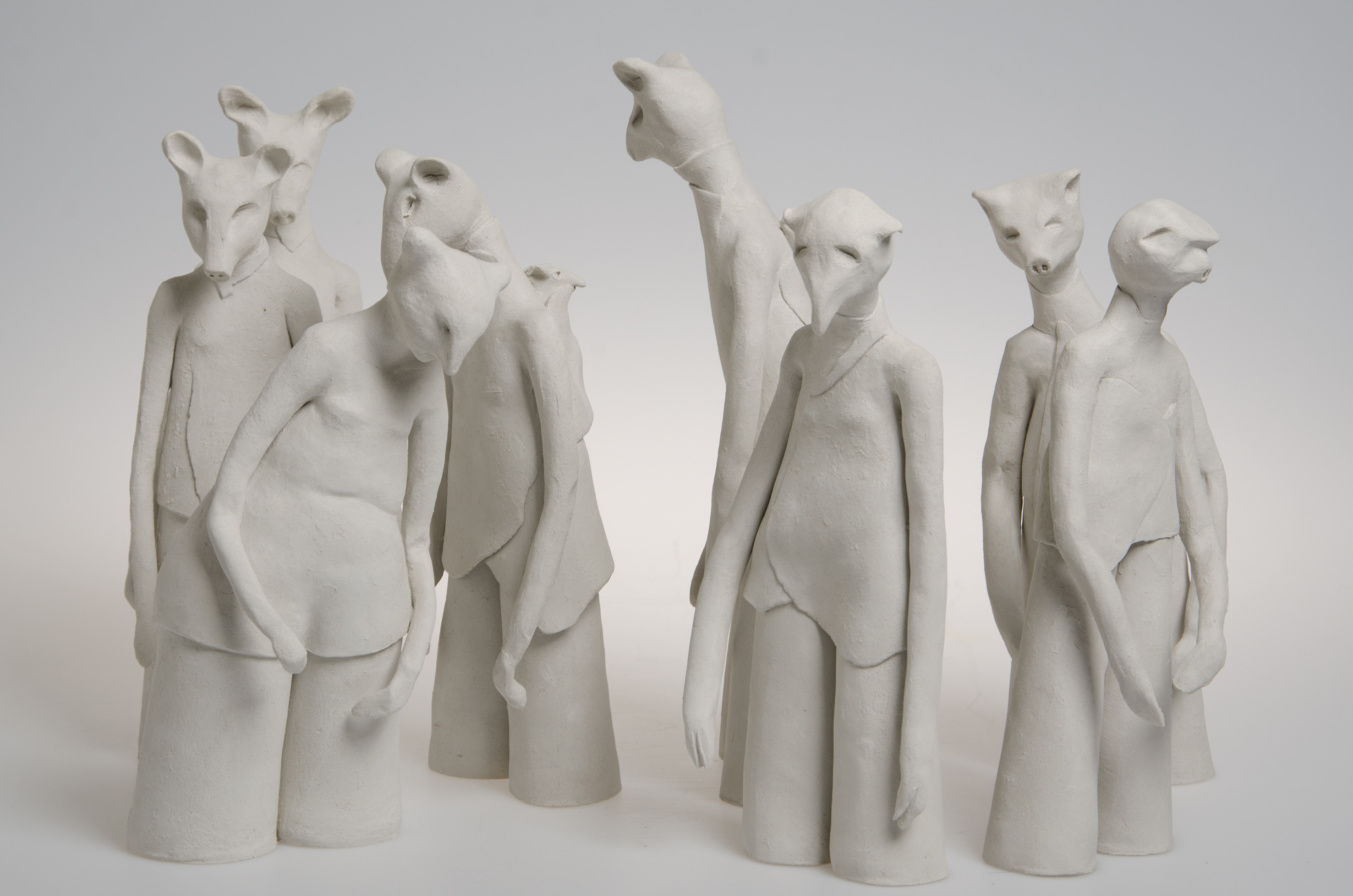
Human Hybridity; historical cultures, own culture, host culture, suspended, in-between, third space
Material Hybridity; clay, yarns, fabrics, beads
Far to Go is a narrative of the migratory journey, of seeking safety, security and stability in another country. It is the journey of leaving ones birth country and seeking refuge in another country. It is a journey of hope and resilience.
This body of work depicts ideals of being wrapped and comforted, of warmth and security. Both in the physical and the physiological realm. It is a story of seeking safety and stability in another land.
It also speaks of losses and pain; of leaving family and friends, a land that is familiar, of the journey into the unknown.
The red yarns and fibre’s reflect; the red tape, the waiting, the required patience and resilience, throughout the migratory process and beyond. So too does the colour allude to the blending of blood lines and future generations.
Inspired by the Nuremberg artists of the 1400’s, I develop ambiguous ceramic figures. Through form and material I investigate the human condition of migration. The migratory journey; from one place to another, the binding and blending of two or more cultures, of historical cultures, one’s own culture and the host culture. The hybrid forms are suspended between two or more cultures and in time blend these cultures, morphing into a unique third.
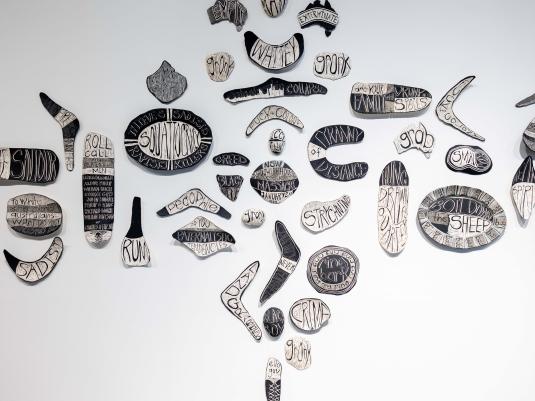
The tile was inspired by the historical narrative of Alison Pick’s fiction, Far to Go (2010), and more recently, the epic documentary, Human Flow (2017) by Ai Weiwei, who gives a powerful visual expression to human migration, inspired the juxtaposing of ceramics and fibres. This visual narrative reflects my personal journey of migration and has been inspired by the illustrative works of Fortunio Liceti, Sebastian Münster and Goya.